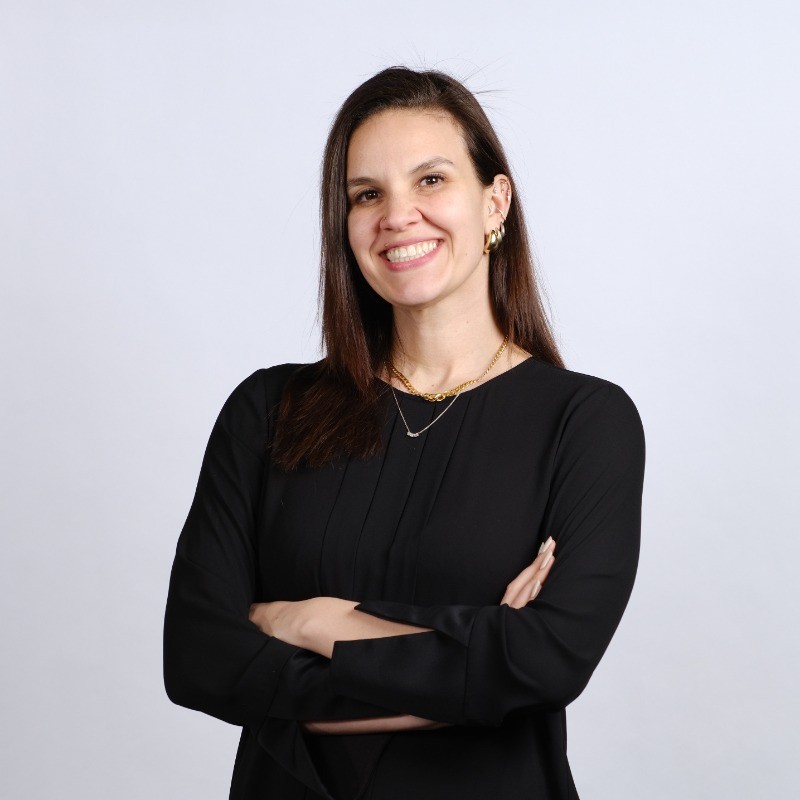
Nathaniel D. Phillips, PhD
Data and Decision Scientist
Make better decisions by simplifying your data, radically.
Say goodbye to bloated processes and data that are weighing you down. I bring focus to decisions by identifying what's critical, bringing it to the forefront, and ignoring the rest. By reducing distractions, and focusing on what matters, your teams will build faster, more confidently, ready for what comes next.
The numbers behind the work
250M+
Patient records across EHR, claims, and survey data
500+
Students and professionals trained in data science and decision-making
10+
Organizations supported, from Big Pharma to early-stage startups
8+
Disease areas spanning oncology, neurology, and psychiatry
5+
Peer-reviewed publications in decision science, psychology, and health outcomes
5+
International conferences presented at, including INFORMS, Judgment and Decision Making, and rstudio::conf
My work follows a single thread: reduce overwhelming data complexity to its essential signal.
See the projectsPhilosophy
Why simple?
Reduce Costs
Less overhead, faster development
Increase Focus
See what really matters, eliminate distractions
Eliminate Indecision
Clear rules that make the right path obvious
Execute Rapidly
Minimize deployment friction, execute anywhere
Every organization drowns in data. Dashboards multiply. Processes grow more complicated. And yet decisions don't get better: they get slower, less confident, and harder to defend.
The evidence is clear, and it comes from fields where the stakes couldn't be higher. A Nobel laureate's simple rule beat twelve complex portfolio models. A three-question decision tree outperformed a roomful of cardiologists. A ninety-second surgical checklist cut deaths by a third.
The organizations that make the best decisions aren't the ones with the most data. They're the ones that have figured out which data matters.
Read the evidenceHow I work
Less is more. Find 2-5 critical data signals and ignore the rest.
Most decision makers are drowning in spreadsheets and dashboards, yet still unsure what to do. Throwing everything into an algorithm and hoping for the best only deepens that confusion and causes cost explosion. In most decisions, a handful of signals do all the work; the rest is noise. My job is to find those flags, cut through the noise, and build tools that make the right path obvious.
Build tools and processes that adapt, not one-time analyses
A one-off analysis answers one question. A well-built tool answers hundreds, and adapts as the questions change. I design reusable systems: APIs, dashboards, cohort builders that flex with shifting priorities, new data, and evolving decisions, so teams aren't starting from scratch every time the situation changes.
Meet people where they are at.
A tool that maximizes a theoretical metric but gets ignored is a failed tool. I design with actual human behavior in mind: how people reason under uncertainty, what makes them trust a result, and where cognitive overload causes good analysis to go unused. The best output is the one that gets acted on.
Expertise scales with code.
The most valuable expertise in any organization often belongs to the quietest people in the room. I surface it. By listening carefully to domain experts, asking the right questions, and translating tacit knowledge into formal, reproducible processes, I turn individual insight into scalable tools. What one expert knows, your whole team can use.
What colleagues say
"Nathaniel and I worked together to deliver real-world-evidence outcomes. Nathaniel served as the lead programmer, ensuring that the project ran smoothly, remained ahead of schedule, and met the highest standards of accuracy in the final deliverables. The most valuable part of working together was learning from his expertise, not only his deep technical knowledge in real-world evidence, but also his skill in client communication and navigating evolving requests effectively and without losing focus on the end goal. I would highly recommend Nathaniel, as he brings a combination of technical expertise, reliability, and strategic communication that makes him an exceptional partner on complex, RWE projects."
Melyssa Minto, PhD
Computational Biologist, Flatiron Health
"I had the pleasure of working with Nathaniel on a project focused on demonstrating the downstream value of psychiatric care. He was thoughtful, open-minded, and highly logical in his approach. Nathaniel communicated clearly, helped bring structure to complex ideas, and played a key role in developing the plan. The most valuable element he brought to the project was his ability to think rigorously while remaining receptive to different perspectives. I learned a great deal from our time working together and would absolutely recommend him to others seeking a strategic collaborator."
Dr. Jacob Kannarkat
Physician, Yale University School of Medicine, Talkiatry
Let's discover simple rules that will transform your decisions
Whether you're a pharma team designing a real-world evidence study, a startup building analytics infrastructure, or a researcher looking for a collaborator: I'd like to hear what you're working on.
Fun fact: I wrote a free, open-source statistics textbook called YaRrr! The Pirate's Guide to R. It's been used by thousands of students worldwide. Yes, there are pirate jokes.
Read it